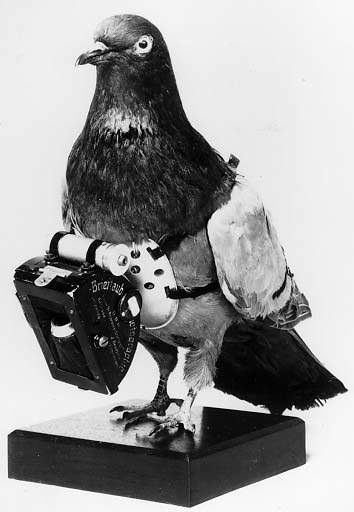

In reading about military pigeons, one might be tempted to think that such services ended after the Second World War. For the most part, that’s accurate. Once electronic communication became cheaper and widespread in the post-war era, most militaries happily disbanded their pigeon services, eager to get rid of a seemingly archaic system. By the 1990s, only Switzerland’s Army boasted a fully fledged pigeon service and even that was phased out after voters slashed the military’s budget in 1994. Yet, unbelievably, pigeons were used to relay wartime messages as recently as 1991. This week, we take a look at how Serbian fighters in the Croatian War of Independence relied on pigeons to carry messages back home to loved ones.
In 1991, a series of geopolitical upheavals erupted across the globe. On January 17th, an international coalition led by the United States wrested Kuwait from Saddam Hussein’s control. Exactly five months later, lawmakers in South Africa repealed apartheid legislation, paving the way for a multi-racial government. And on Boxing Day, the Soviet Union officially dissolved after more than 70 years of rule.
Amidst this tumult, Yugoslavia—the great hope of South Slav nationalists in the aftermath of World War One—plunged into chaos. Composed of six constituent republics and two autonomous provinces divided roughly along ethnic lines, the nation saw a sharp rise in secessionist movements following the 1980 death of longtime President, Josip Broz Tito. On June 25th, 1991, the republics of Slovenia and Croatia declared independence. This inflamed tensions with the republic of Serbia, the largest and most dominant region in the country. Serbian officials sought to preserve the Yugoslav federal government, regarding the independence attempts as illegal and unconstitutional. Ostensibly to protect Serbs living in Croatia, the Serb-dominated Yugoslav People’s Army invaded the region on September 20th.
The Croatian War of Independence—just one in a series of conflicts known as the Yugoslav Wars—ushered in a level of brutality not seen in Europe since World War II. Indeed, one reporter characterized it as “a war fed by centuries-old hostilities and carried out with a crude vigor reminiscent of the Middle Ages.” Almost 20,000 people would die by war’s end, while devastating attacks on Croatian infrastructure caused nearly $37 billion in damages. Phone lines were quickly cut down, mail services interrupted, and transportation between different regions became nigh impossible. As a consequence, Serbian fighters venturing behind Croatian lines had no way of contacting friends and family. The soldiers’ complaints did not concern military officials, given that satellite technology allowed for them to stay in contact with Belgrade’s military HQ.
An unorthodox approach emerged in Požarevac, an eastern Serbian city. Famous for its swift carrier pigeons, the city hosted many fanciers, such as Slobodan Brkić, the president of the country’s premier pigeon society. A lover of pigeons since he was 6 years old, Brkić specialized in breeding Tipplers, a breed renowned for its flight stamina. In 1975, he founded the first Tippler club in Yugoslavia, while in the 1980s, he helped organize the Yugoslav Carrier Pigeon Association. Inspired by accounts of pigeons delivering despatches during the Great War, Brkić opted to donate his club’s birds to soldiers traveling along the route from Požarevac to Vukovar, Croatia, the site of fierce fighting.
Beginning in Mid-October, Brkić started distributing Požarevac’s pigeons to local soldiers. They were placed in “ventilated cake boxes” and driven into Croatia along with other supplies, a journey which required “days of stealthy movement.” Handlers on the frontline received the pigeons and distributed them to Požarevac fighters, who were instructed to secure brief messages to the birds’ leg bands and release them. In a testament to the birds’ prowess, they typically made the return journey in around 1 to 2 hours. The first pigeon to return—a bird called Whitehead—brought news home that one soldier was safe and fighting in the Croatian town of Mirkovci. By the end of November, at least 90 successful deliveries had been completed. Only one bird had been lost on the frontline, a racing pigeon named Big Red. His owner chalked the loss up to foul play; he claimed either a trained hawk or a Croatian sniper was likely responsible.
As the notes arrived, they were broadcast over the airwaves for the community’s benefit. “We began by reading the messages over local radio, because people here had no word on their boys at the front,” Brkić explained to an American journalist. The letters usually contained just a few words—”Dear father: I’m fine. Don’t worry about me. I’ll be home soon. Dule,” is a typical example. In spite of their brevity, the despatches brought intense joy to local families, who thanked Brkić profusely. “People were so happy to hear from their sons that they would come up to me on the street and kiss my hand.”
At the start of 1992, the intensity of the conflict waned. A cease-fire was brokered on January 2nd, thereby abrogating the need for pigeons. Based upon our research, we at Pigeons of War believe that this was the last conflict in which combatants depended upon pigeons to carry important messages. Požarevac’s pigeons, therefore, deserve much respect for proving that pigeon posts are still a viable option even in the Information Age.
Sources:
- “Слободан Бркић: Лет Дуг Читав Живот.” Recnaroda, 5 Sept. 2020, recnaroda.co.rs/slobodan-brkic-let-dug-citav-zivot/.
- Williams, Carol J., “Communications: Carrier Pigeons Make Comeback in War,” The Los Angeles Times, available at https://www.latimes.com/archives/la-xpm-1992-01-11-mn-1529-story.html
 Pigeons of War