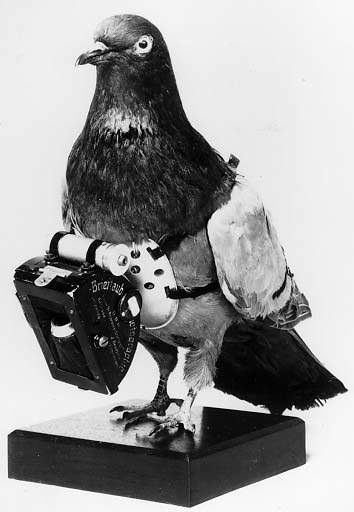

The Balkan Peninsula was a hotbed of activity during the latter-half of the 19th century. The Ottoman Empire had ruled the region for centuries, but a rise in ethnic nationalism challenged the status quo. Following a series of wars and rebellions, the Sick Man of Europe gradually receded from the Peninsula. At the close of the century, three newly independent countries existed in the Balkans: The Kingdom of Serbia; the Principality of Montenegro; and the Kingdom of Romania. This week, we take a look at the Kingdom of Serbia and its military pigeon service.
The Kingdom of Serbia implemented a military pigeon service in the opening years of the 20th century. The service was the brainchild of Kosta Miletić, an innovator of military aviation and the first Serbian Air Force Commander. As a young army officer, Miletić had been sent to a Russian military aviation school in 1901. At that time, military aircraft were limited primarily to gas-filled observation balloons, which had been deployed in the American Civil War and Franco-Prussian War to great effect. Throughout 1901 and 1902, Miletić studied up on the art of military ballooning, achieving excellent grades. He also spent six months at the school’s pigeon station, where he learned that the birds could be used by balloon pilots to send status reports to troops on the ground. In September 1902, Miletić had the opportunity of putting his ballooning and pigeon training in action. The Russian Army had planned a series of grand maneuvers across the country and Miletić was assigned to the Kiev Army. Piloting a balloon, he attained a height of 1100 meters and a distance of 180 kilometers, all the while sending messages back to the ground via pigeon.
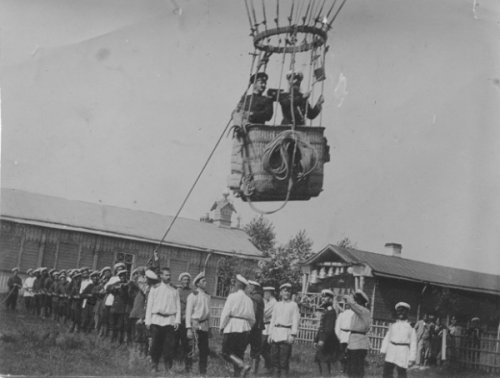
Miletić returned to Serbia as the country’s first aeronaut The Minister of Defense assigned him to work in the Ministry’s engineering department, where he developed plans for balloon units in the Army. Inspired by Russia’s pigeon stations, he also sketched out concepts for a network of pigeon stations across Serbia. However, when Miletić presented his ideas to the Minister, the plans were shelved and Miletić reassigned to a different division.
Miletić’s plans for a military pigeon network remained dormant until October 1908, when Austria-Hungary annexed Bosnia and Herzegovina During that crisis, a basket of 17 carrier pigeons en route to Obrenovac was seized by the Serbian authorities. The Minister of Military Affairs sent Miletić to receive the pigeons and he determined that they were from Austro-Hungarian pigeon stations, having been brought to Serbia to assist Austro-Hungarian spies. Almost immediately, the military ordered Miletić to set up a pigeon station in Niš.

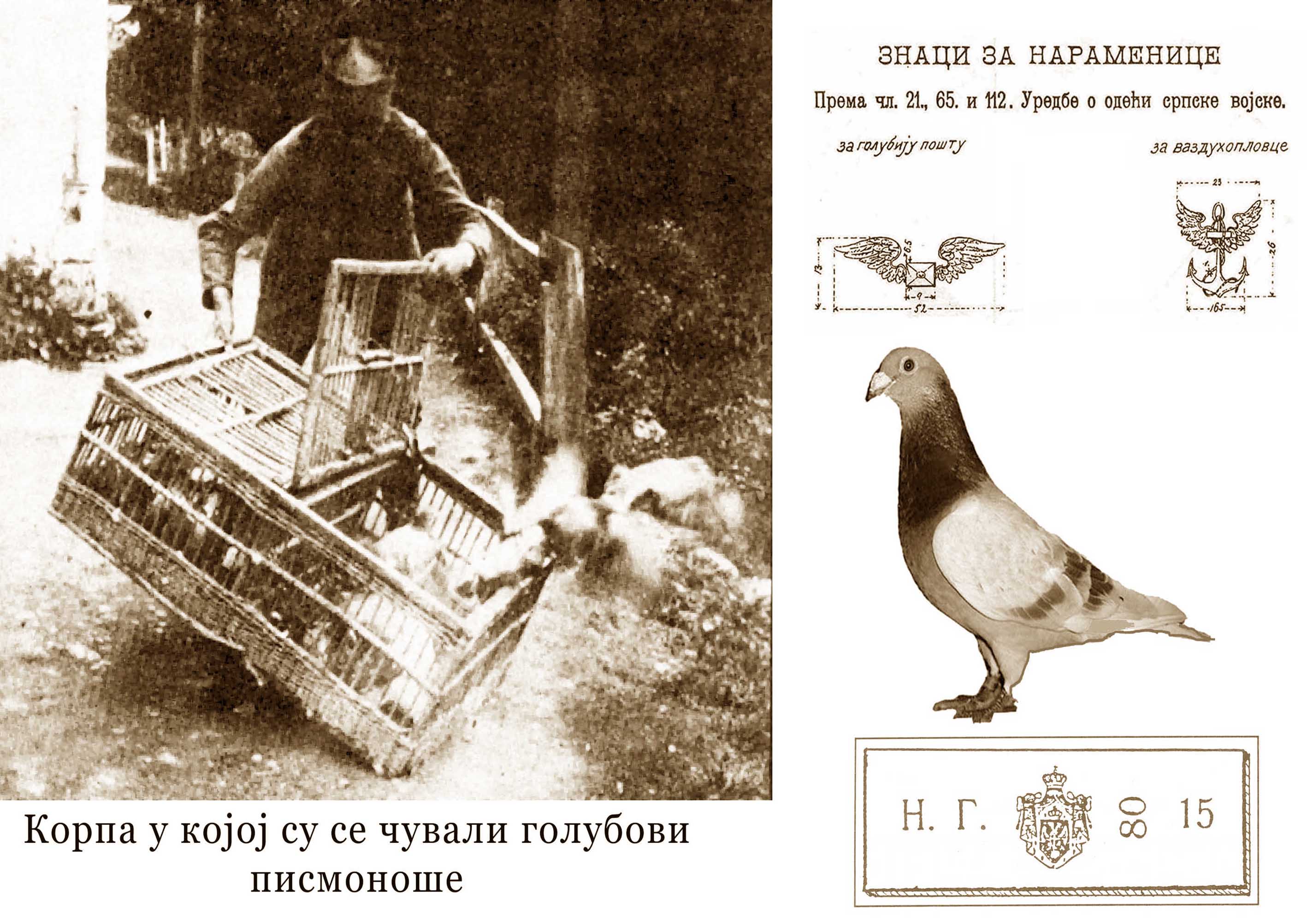
On November 26, 1908, the Niš station was established, stocked with mostly confiscated Austro-Hungarian pigeons. Under the care of an engineering battalion, the station was led by a lieutenant who had been personally trained by Miletić. The staff included a sergeant and three soldiers. A horse-drawn cart was used to transport the birds. In 1909, an additional building was constructed to meet the station’s needs—it contained an office, a soldier’s room, a storehouse for food, and a section for ill pigeons. Actual flight training did not take place until 1910, after the foreign birds had produced a sufficient quantity of squeakers. The pigeons were trained to fly from Sukovo, Užice and Smederevska Palanka. From Sukovo, the pigeons could reach Niš in one hour, while from Smederevska Palanka and Užice, they made the trip in two hours.
Officials were impressed with the results obtained at Niš. In 1911, they ordered that a second station be built in Pirot. The pigeons at this station maintained communications between Pirot and other military fortifications in the area. On Christmas Eve 1912, the Ministry of Defense officially established the Serbian Air Force (SAF) as a division within the Army, becoming one of the first countries to boast its own air force. The fledgling SAF consisted of the military’s twelve airplanes, two balloons, a hydrogen plant, and two pigeon stations. Miletić assumed command, a natural choice given his background. Plans were made to expand the Niš station by adding two more lofts and a breeding depot to supply Pirot and future stations. However, it is unclear if these changes were ever implemented.
An opportunity to test the SAF’s pigeons under wartime conditions appeared in 1913, when Serbia was engaged in the First Balkan War. For some unknown reason, though, the Serbian military did not use its birds during that conflict, despite their availability. Another opportunity emerged a year later, as Austria-Hungary prepared to invade Serbia for the assassination of Archduke Franz Ferdinand. The SAF put its 192 pigeons to work in the opening weeks of the war, flying messages from border troops to the Supreme Command of the Army, which was based in Niš.
But the combined might of the German, Austro-Hungarian, and Bulgarian armies overpowered the Serbian Army. On November 23rd, 1915, the Serbian government and Supreme Command ordered soldiers to retreat across the mountains of Montenegro and Albania to the Adriatic coast. The Niš and Pirot stations were evacuated, as the staff members and the pigeons joined the retreat. By February 1916, most of the remaining Serbian troops and government officials had been evacuated to the Greek island of Corfu, then under French control.
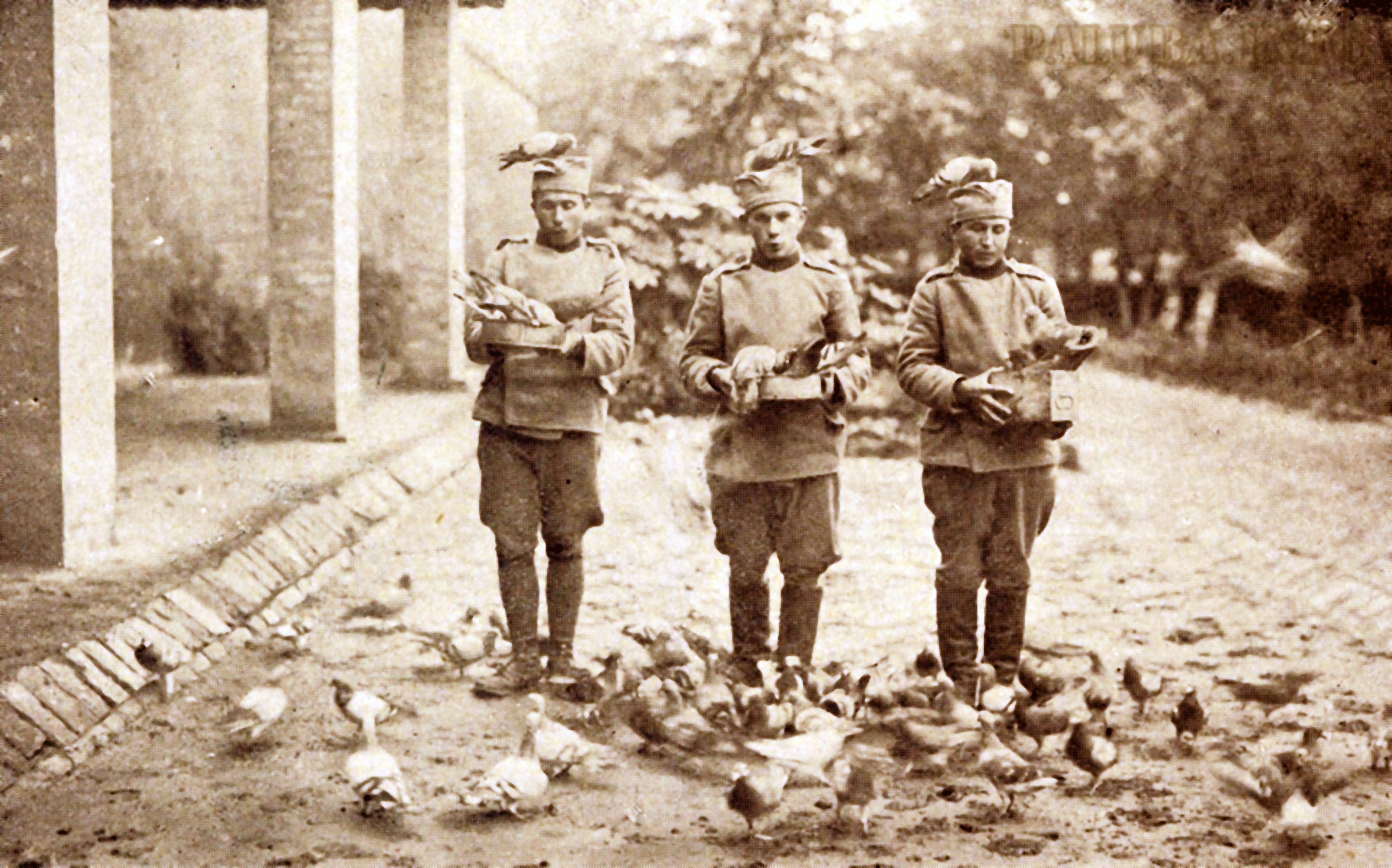
Amidst this retreat, military officials paused the pigeon post indefinitely as the Army regrouped. Near the end of 1916, the Serbian Army traveled to Thessaloniki to join in the Allied effort to defeat Bulgaria. After months of fighting, on August 15, 1918, the Supreme Command reactivated the military’s pigeon service, placing it under the ambit of the Army’s postal and telegraph department. Officials opted to set up a pigeon station in Stari Čardak, a city near Thessaloniki. Lieutenant-General George Milne, commander of the British Salonika Force, generously donated 150 pigeons and two lofts to get the station up and running. The pigeons apparently greatly contributed to Allied intelligence work on the Macedonian Front; Allied agents took the birds with them as they ventured into enemy territory.
The Great War ended in the fall of 1918. Although it was one of the victors, the Kingdom of Serbia ceased to be a political entity that year. In its place emerged the Kingdom of Serbs, Croats, and Slovenes. A nation-state embracing the ideology of Pan-Slavism, the country eventually changed its name to the Kingdom of Yugoslavia in 1929. In spite of the political change, the military wasn’t ready to jettison its birds. The Yugoslav Army maintained a pigeon service in the inter-war period, even expanding it; a prominent station housing 2,000 birds was established at Petrovaradin. After the Second World War, the military abandoned its pigeon service, but pigeons still played a role in the Yugoslav Wars in the early 1990s. It is a testament to Kosta Miletić’s vision that Serbia’s military pigeon service lasted in one shape or form for decades.
Sources:
- “110 Година Голубије Поште у Српској Војсци.” 110 Година Голубије Поште у Српској Војсци | УПВЛПС, https://udruzenjepvlps-org.translate.goog/blog/2018/11/02/110-godina-golubije-poste-u-srpskoj-vojsci/?_x_tr_sch=http&_x_tr_sl=auto&_x_tr_tl=en&_x_tr_hl=en&_x_tr_pto=wapp.
- Весна Илић, РТС. “Српско Војно Ваздухопловство На Данашњи Дан Формирано у Нишу.” Јужна Србија Инфо, 24 Dec. 2015, https://www-juznasrbija-info.translate.goog/drustvo/srpsko-vojno-vazduhoplovstvo-na-danasnji-dan-formirano-u-nisu.html?_x_tr_sl=sr&_x_tr_tl=en&_x_tr_hl=en&_x_tr_pto=wapp.
- Benitez, E.M., “Military News Around the World,” The Command and General Staff School Military Review, Vol. XIX, No. 73, June 1939, at 27.
- Војска Краљевине Србије, https://www-pogledi-rs.translate.goog/forum/thread-4160-post-121406.html?_x_tr_sl=de&_x_tr_tl=en&_x_tr_hl=en&_x_tr_pto=wapp.
- Lyon, James, Serbia and the Balkan Front, 1914: The Outbreak of the Great War, at 82-83, (2015).
- “‘The ‘Heavenly Army’ Flew from Petrovaradin up to 100 Kilometers per Hour, Did You Know about the Pigeon Post Unit?” Serbia Posts English, Serbia Posts English, 12 Nov. 2022, https://serbia.postsen.com/local/78284/The-Heavenly-Army-flew-from-Petrovaradin-up-to-100-kilometers-per-hour-did-you-know-about-the-PIGEON-POST-unit.html.
- Vojinović, Vladeta D., Vazduhoplovstvo Srbije na Slounskom frontu: 1916-1918, at 240 (2000).
 Pigeons of War